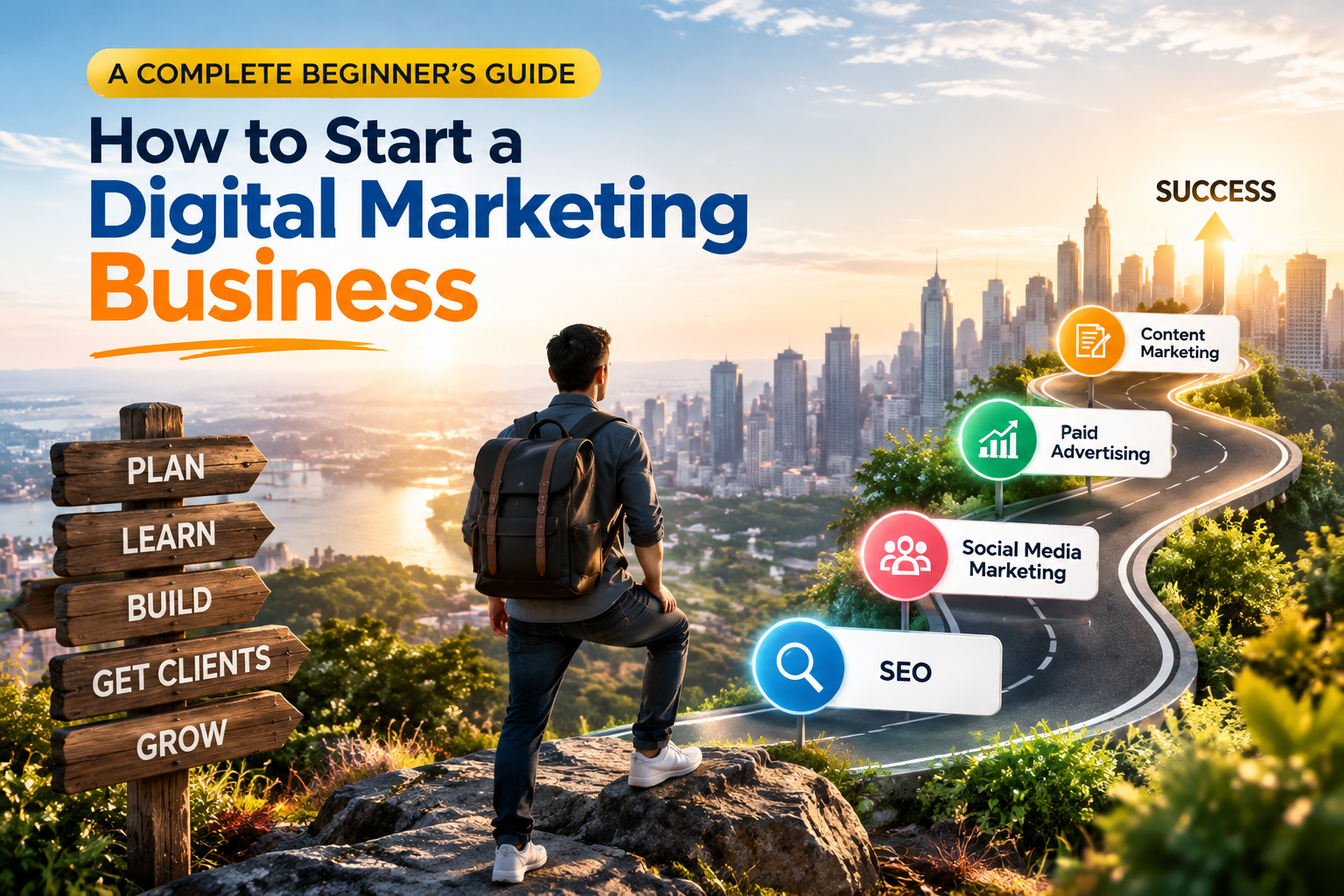
Introduction
The digital world has completely changed how businesses attract customers, build brands, and generate revenue. Today, companies of all sizes depend on digital marketing strategies to increase visibility, reach potential customers, and compete in the online marketplace.
From search engine optimization (SEO) and social media marketing to paid advertising and content creation, digital marketing has become one of the fastest-growing industries worldwide. Businesses need skilled professionals who can help them improve their online presence, attract targeted customers, and generate measurable results.
This growing demand creates a huge opportunity for entrepreneurs who want to learn how to start a digital marketing business and build a profitable online career.
Starting a digital marketing business does not always require a large investment. With the right skills, proper planning, and a strong understanding of marketing strategies, beginners can start working with clients and gradually build a successful agency.
To become successful in this field, it is important to develop strong knowledge of SEO, content marketing, website optimization, and digital growth strategies. Learning professional techniques through On-Page SEO Expert services and Off-Page SEO Expert services can help you build a strong foundation for your digital marketing career.
In this complete guide, you will learn how to start a digital marketing business step by step, what services to offer, how to find clients, what tools you need, and how to grow your agency successfully.
What Is a Digital Marketing Business?
A digital marketing business helps companies promote their products and services through online platforms. The main goal is to increase brand awareness, attract potential customers, generate leads, and improve sales.
Unlike traditional marketing, digital marketing allows businesses to reach specific audiences and measure campaign performance through data.
A digital marketing agency usually provides services such as:
Search Engine Optimization (SEO)
SEO helps websites improve their visibility on search engines like Google and attract organic traffic.
SEO services include:
- Keyword research
- Website optimization
- Technical SEO
- Content optimization
- Link building
- Local SEO
A strong understanding of both On-Page SEO and Off-Page SEO is essential for anyone who wants to build a successful digital marketing business.
Social Media Marketing
Social media marketing helps businesses connect with customers through platforms such as Facebook, Instagram, LinkedIn, and TikTok.
Services include:
- Content planning
- Social media management
- Audience engagement
- Brand awareness campaigns
- Performance analysis
Paid Advertising
Many businesses use paid advertising to quickly reach their target customers.
A digital marketing business can manage:
- Google Ads
- Facebook Ads
- Instagram Ads
- YouTube Ads
- LinkedIn Ads
Paid campaigns require knowledge of audience targeting, ad creation, budget management, and conversion tracking.
Content Marketing
Content marketing focuses on creating valuable information that attracts and educates customers.
Examples include:
- Blog posts
- Website content
- Videos
- Guides
- Email newsletters
Publishing SEO-focused content regularly can also help businesses improve their online visibility. You can explore more SEO-related strategies from our SEO Blog section.
Why Start a Digital Marketing Business?
1. Low Startup Cost
One of the biggest advantages of starting a digital marketing business is the low investment requirement.
Unlike traditional businesses, you do not need:
- Physical inventory
- Large office space
- Expensive equipment
- Manufacturing costs
A computer, internet connection, marketing skills, and professional tools are enough to begin.
This makes digital marketing an attractive business opportunity for freelancers and entrepreneurs.
2. Growing Demand for Digital Marketing Services
Businesses are becoming more dependent on online marketing every year.
Small businesses, eCommerce stores, service providers, and international companies all need digital marketing support to increase their visibility and attract customers.
However, many business owners do not have enough time or expertise to manage SEO, content marketing, and online campaigns themselves.
This creates a continuous demand for skilled digital marketers.
3. Work With Clients Worldwide
One of the biggest benefits of digital marketing is the ability to work with clients from anywhere in the world.
You can provide services to businesses located in:
- United States
- United Kingdom
- Canada
- Australia
- Europe
- Middle East
With online communication tools, you can manage projects remotely without geographical limitations.
4. Multiple Income Opportunities
A digital marketing business can generate income from different services.
Examples:
- Monthly SEO packages
- Website audits
- Social media management
- Advertising management
- Content marketing
- Marketing consulting
Recurring monthly services can help create stable business revenue.How to Start a Digital Marketing Business Step by Step
Step 1: Learn Essential Digital Marketing Skills
Before starting your business, you need to develop strong digital marketing knowledge.
You do not need to master every marketing skill immediately. Start with the most valuable skills and improve gradually as you gain experience.
Learn SEO
SEO is one of the most important skills for anyone planning to start a digital marketing business.
SEO helps businesses increase their website visibility, attract organic traffic, and reach potential customers through search engines.
Important SEO areas include:
- Keyword research
- On-page optimization
- Technical SEO
- Content optimization
- Link building
- Local SEO
Understanding professional optimization techniques through On-Page SEO Expert services and Off-Page SEO Expert services can help you deliver better results for clients and build your authority as a digital marketer.
For beginners who want to improve their SEO knowledge, regularly reading industry insights and guides from trusted resources like our SEO Blogs can help develop practical understanding.
Learn Paid Advertising
Paid advertising is another valuable skill in digital marketing.
Businesses use paid campaigns to quickly reach their target customers and generate leads.
Important skills include:
- Audience targeting
- Ad copywriting
- Campaign setup
- Conversion tracking
- Budget optimization
A successful digital marketer understands how to create campaigns that generate measurable results instead of simply spending advertising budgets.
Learn Social Media Marketing
Social media platforms provide businesses with opportunities to connect directly with their customers.
Important social media marketing skills include:
- Content strategy
- Social media management
- Audience engagement
- Community building
- Performance analysis
Understanding customer behavior and creating engaging content are essential for successful social media campaigns.
Learn Content Marketing
Content marketing helps businesses attract customers by providing valuable information.
Important content marketing skills include:
- Blog writing
- Copywriting
- Content planning
- Storytelling
- SEO content optimization
High-quality content combined with proper SEO strategies can help businesses increase visibility and build trust with their audience.
Step 2: Choose Your Digital Marketing Niche
Many beginners make the mistake of trying to serve every type of business.
Instead, selecting a specific niche can help you grow faster and position yourself as an expert.
Examples of profitable digital marketing niches include:
- Real estate businesses
- Restaurants
- Healthcare providers
- eCommerce stores
- Fitness businesses
- Local service businesses
- Software companies
Choosing a niche helps you:
- Understand customer problems better
- Create targeted marketing strategies
- Develop specialized offers
- Build stronger authority
For example:
Instead of saying:
“We provide digital marketing services.”
You can say:
“We help local businesses increase their online visibility through SEO and digital marketing strategies.”
A specific message creates more trust and makes it easier to attract the right clients.
Step 3: Decide Your Digital Marketing Services
After choosing your niche, decide which services you will provide.
Start with services where you have strong knowledge and can deliver measurable results.
Example service packages:
Starter Package
Suitable for small businesses that are beginning their online journey.
Includes:
- Website audit
- Keyword research
- Basic SEO recommendations
- Monthly performance report
Growth Package
Designed for businesses that want consistent online growth.
Includes:
- SEO optimization
- Content creation
- Social media management
- Website improvement suggestions
Premium Package
For businesses looking for complete digital growth solutions.
Includes:
- Complete digital strategy
- SEO optimization
- Paid advertising management
- Conversion optimization
- Monthly consultation
Creating clear packages makes it easier for potential clients to understand your services and choose the right solution.
Step 4: Build Your Business Website
Your website is your online identity and one of the most important assets for your digital marketing business.
A professional website helps build trust, demonstrate your expertise, and attract potential clients.
Your website should include:
Homepage
Your homepage should clearly explain:
- Who you help
- What services you provide
- Why clients should choose you
Services Page
Create separate pages explaining your services.
Examples:
- SEO Services
- Digital Marketing Services
- Content Marketing
- Social Media Marketing
Portfolio Page
A portfolio helps potential clients understand your experience and capabilities.
Include:
- Previous projects
- Case studies
- Marketing results
- Client achievements
About Page
Your personal story helps build credibility and trust.
You can introduce your experience, professional journey, and marketing approach through your About Me page.
Contact Page
Make it easy for visitors to contact you.
Include:
Social media profiles
Contact form
Email address
Phone number
Step 5: Create a Strong Portfolio
A strong portfolio helps clients understand your skills and results.
If you are a beginner and do not have previous clients, you can build experience in several ways.
Work on Your Own Website
Improve your own website performance and use the results as proof of your skills.
Examples:
- Increase website traffic
- Improve search rankings
- Create SEO strategies
- Publish optimized content
Offer Free or Discounted Projects
Helping a few businesses initially can help you collect:
- Testimonials
- Reviews
- Case studies
- Practical experience
Create Sample Projects
You can create sample marketing projects to demonstrate your skills.
Examples:
- SEO audits
- Content strategies
- Social media plans
- Advertising campaign ideas
A professional portfolio increases client confidence and helps you charge better prices.
Step 6: Find Your First Digital Marketing Clients
Getting your first clients is one of the biggest challenges when starting a digital marketing business. However, with the right approach and consistent effort, you can build a steady flow of potential customers.
Some effective methods include:
Freelance Platforms
Freelance platforms can help beginners gain experience and find their first clients.
Popular platforms include:
- Upwork
- Fiverr
- Freelancer
- PeoplePerHour
When starting on freelance platforms:
- Create a professional profile
- Highlight your digital marketing skills
- Showcase your portfolio
- Write personalized proposals
- Focus on solving client problems
Instead of only promoting your services, explain how your skills can help businesses improve their online presence.
LinkedIn Networking
LinkedIn is a powerful platform for finding business clients and building professional relationships.
Effective strategies include:
- Sharing valuable marketing content
- Connecting with business owners
- Participating in industry discussions
- Sending personalized messages
- Building professional relationships
Regularly sharing your knowledge about SEO, digital marketing, and online growth can help establish your authority.
Cold Outreach
Cold outreach is another effective way to find potential clients.
Research businesses that may need digital marketing support.
Look for companies with:
- Poor website rankings
- Weak online visibility
- Limited content
- No clear advertising strategy
Create personalized messages explaining their current challenges and how your services can help them achieve better results.
Local Business Marketing
Many local businesses need help improving their online presence.
Potential clients include:
- Restaurants
- Clinics
- Gyms
- Real estate companies
- Small businesses
You can approach local businesses and offer services such as SEO improvement, website optimization, and online marketing strategies.
Step 7: Use Digital Marketing Tools
Professional tools help digital marketers analyze performance, improve efficiency, and deliver better results for clients.
SEO Tools
SEO tools help with keyword research, competitor analysis, website audits, and ranking improvements.
Popular tools include:
Google Search Console is especially useful for monitoring website performance, search visibility, and technical issues.
Analytics Tools
Data plays an important role in digital marketing success.
Analytics tools help you understand:
- Website traffic
- User behavior
- Conversion performance
- Marketing campaign results
Popular analytics tools include:
- Google Analytics
- Looker Studio
Design Tools
Visual content is important for social media marketing and content creation.
Useful design tools include:
- Canva
- Adobe Photoshop
Project Management Tools
Managing multiple clients requires proper organization.
Useful project management tools include:
- Trello
- ClickUp
- Asana
These tools help manage deadlines, tasks, communication, and workflow.
Communication Tools
Effective communication helps maintain strong client relationships.
Common tools include:
- Slack
- Zoom
Step 8: Set Your Pricing Strategy
Setting the right pricing is important for building a profitable digital marketing business.
Your pricing should depend on:
- Experience level
- Service quality
- Client industry
- Project complexity
- Expected results
Common pricing models include:
Monthly Retainer
Many digital marketing agencies use monthly retainers.
Clients pay a fixed monthly amount for continuous services.
Examples:
- SEO management
- Content marketing
- Social media management
- Advertising optimization
Monthly packages create predictable recurring revenue.
Project-Based Pricing
Some clients prefer paying for specific projects.
Examples:
- Website SEO audit
- Keyword research
- Content strategy
- Website optimization
Project-based pricing works well for businesses that need specific solutions.
Consultation Pricing
Experienced digital marketers can offer consulting services.
Consultation may include:
- Marketing strategy development
- SEO recommendations
- Growth planning
- Business advice
Step 9: Build Systems and Scale Your Business
Once you start getting regular clients, the next step is scaling your digital marketing business.
Creating proper systems helps you manage more projects efficiently.
Develop processes for:
- Client onboarding
- Reporting
- Project management
- Communication
- Service delivery
A structured workflow improves efficiency and creates a better client experience.
Build a Team
As your business grows, you may need specialists who can handle different areas.
You can hire:
- SEO specialists
- Content writers
- Graphic designers
- Ads managers
- Web developers
Building a skilled team allows you to serve more clients and expand your services.
Common Mistakes to Avoid When Starting a Digital Marketing Business
Trying to Offer Every Service
Many beginners try to provide every possible marketing service.
However, focusing on specific skills and industries helps you build expertise faster.
Start with services where you can provide the best results.
Ignoring Your Own Marketing
A digital marketing business must also market itself.
Your own website, content, and online presence should demonstrate your skills.
Creating valuable content and sharing SEO knowledge through platforms like your SEO Blog can help attract potential clients.
Charging Too Little
Low pricing may attract clients, but it can make it difficult to build a sustainable business.
Focus on:
- Providing quality services
- Creating measurable results
- Building long-term relationships
Not Measuring Results
Clients want to see the impact of your work.
Track important metrics such as:
- Website traffic
- Search rankings
- Leads generated
- Sales growth
- Advertising performance
Using proper analytics and reporting helps demonstrate your value.
How Much Does It Cost to Start a Digital Marketing Business?
A digital marketing business can be started with a relatively small investment compared to many other businesses.
Estimated startup costs include:
Website
Approximate cost:
$100–$500
A professional website helps establish credibility and attract potential clients.
Marketing Tools
Approximate cost:
$50–$300 per month
Tools for SEO, analytics, project management, and design may require monthly investment.
Advertising
Approximate cost:
$100–$500
Investing in your own marketing can help generate leads and grow your business.
Business Software
Approximate cost:
$50–$200 per month
Software helps manage clients, communication, and workflow.
A beginner can start with around $500–$1000 and gradually increase investment as the business grows.
Is Digital Marketing Business Profitable?
Yes, a digital marketing business can become a highly profitable online business when managed correctly.
Profitability depends on:
- Your marketing skills
- Ability to attract clients
- Quality of services
- Client retention
- Business systems
Successful digital marketing agencies often generate recurring monthly revenue by providing ongoing services such as SEO, advertising management, and content marketing.
Continuous learning is also important because digital marketing trends and algorithms constantly change.
Professionals who continue improving their skills and adapting to new strategies have better opportunities for long-term success.nue by providing ongoing marketing services.
Conclusion
Starting a digital marketing business is a great opportunity for anyone who wants to build an online career or create a scalable agency.
Success does not come only from learning marketing techniques. It requires a combination of skills, business strategy, client management, and consistent effort.
Choosing the right niche, building a professional brand, developing strong SEO knowledge through resources like On-Page SEO Expert and Off-Page SEO Expert services, and delivering measurable results can help you create a successful digital marketing business.
Start small, gain experience, build your portfolio, and gradually expand your services.
With dedication, the right strategy, and continuous improvement, a digital marketing business can become a profitable and sustainable source of income.